Skip to content
Division of Health AIDivision of Health AI
AboutTeamResearchPublicationsJoin
Theme
Division of Health AIDivision of Health AI

Clinical AI built with the data and clinicians of Northwell Health.

Explore

  • About
  • Team
  • Research
  • Publications
  • Join

Affiliations

  • Feinstein Institutes (opens in new tab)
  • Northwell Health (opens in new tab)
  • Zucker School of MedicineHofstra Northwell

Located at

  • Institute of Health System Science
  • Institute of Bioelectronic Medicine
  • Manhasset, New York

© 2026 Division of Health AI, Northwell Health. All rights reserved.

All research

NIH-funded · Active since 2020

In-hospital deterioration prediction

Deep learning models that estimate a hospitalized patient's risk of deterioration continuously, from the electronic health record and from wearable sensors, so that clinicians are warned hours before a rapid response or ICU transfer.

Hansen et al., training and retrospective validation of NIDM, under review. Patel et al., systematic review and meta-analysis of Epic clinical decision support tools, under review at the Journal of General Internal Medicine.
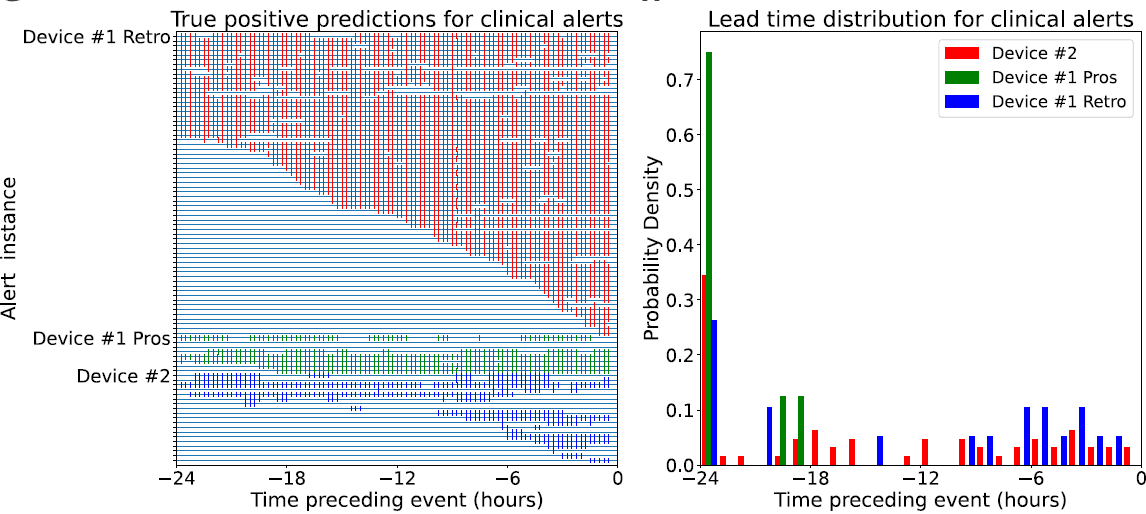
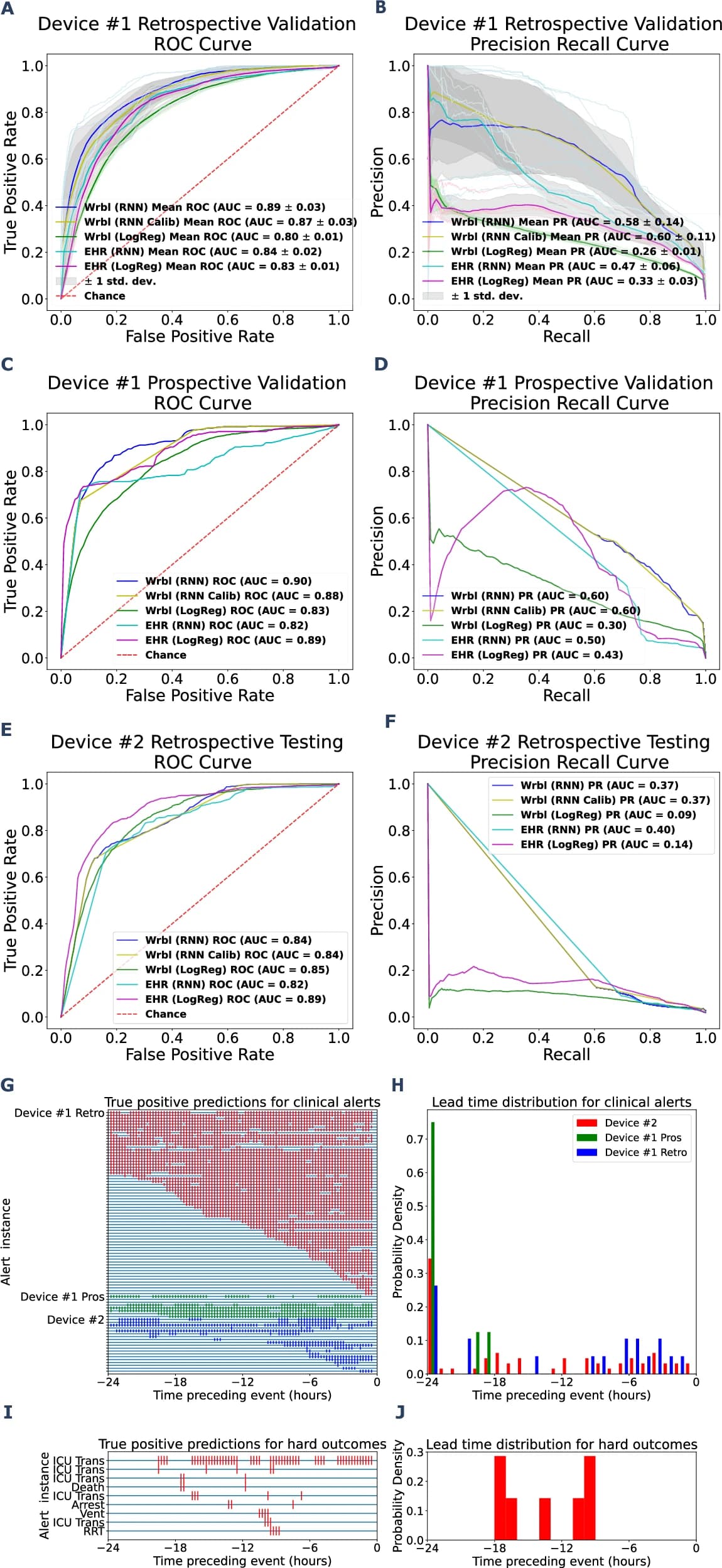
True-positive predictions across the 24 hours preceding each clinical alert, and the distribution of lead times by device.
True-positive predictions across the 24 hours preceding each clinical alert, and the distribution of lead times by device.Nature Communications, 2025 · CC BY-NC-ND 4.0 (opens in new tab)

Overview

Up to five percent of adult patients on medical-surgical wards deteriorate during their stay, and the standard response, vital signs taken every four to six hours, is both too sparse for the patients at risk and unnecessary for the stable majority. The program builds models that read the data a hospital already collects and turn it into a continuous estimate of risk.

Three strands run in parallel. The Northwell In-hospital Deterioration Model (NIDM) reads the electronic health record and runs in silent mode inside the hospitals' Epic system. A wearable-based model, published in Nature Communications in 2025, predicts clinical deterioration up to 17 hours before onset from nine physiological signals streamed from continuous monitors. An earlier model, published in npj Digital Medicine in 2020, identified patients stable enough to sleep through the night without vital-sign checks.

The work is funded by a $3.19M award from the National Institute of Nursing Research (2023 to 2027) and, from 2026, a National Library of Medicine award to scale wearable foundation models for deterioration detection.

Status
Active since 2020
Program
NIH-funded
Funding
National Institute of Nursing Research; National Library of Medicine
Publications
2, latest 2025
Team
4 members

Awards

  • Optimization of monitoring, prediction and phenotyping of deterioration of in-hospital patients using machine learning and multimodal real-time data

    National Institute of Nursing Research · $3.19M · 2023 to 2027

    Karina W. Davidson and Theodoros Zanos

    R01NR020774 (opens in new tab)
  • Scaling clinical wearable foundation models for the detection of in-hospital deterioration

    National Library of Medicine · 2026 to 2029

    Michael Scheid

    R50LM015185 (opens in new tab)

Lines of work

3 strands

  1. 01

    EHR-based prediction (NIDM)

    A deep learning model over the electronic health record that continuously estimates deterioration risk and runs in silent mode inside Epic.

    No publication yet.

  2. 02

    Wearable continuous alert system

    A model over nine physiological signals from wearable monitors, validated on 888 adult non-ICU visits, that predicts deterioration up to 17 hours ahead.

    Nature CommunicationsNov 2025

    Beyond episodic early warning systems: a continuous clinical alert system for early detection of in-hospital deterioration

    (opens in new tab)
  3. 03

    Overnight stability monitoring

    A model that predicts overnight stability from vital-sign sequences, allowing unnecessary night-time monitoring to be skipped for stable patients.
    npj Digital MedicineNov 2020

    Let Sleeping Patients Lie, avoiding unnecessary overnight vitals monitoring using a clinically based deep-learning model

    (opens in new tab)
True-positive predictions across the 24 hours preceding each clinical alert, and the distribution of lead times by device.
True-positive predictions across the 24 hours preceding each clinical alert, and the distribution of lead times by device. Nature Communications, 2025 (opens in new tab) · CC BY-NC-ND 4.0
Model performance on clinical alerts and hard outcomes across the validation stages.
Model performance on clinical alerts and hard outcomes across the validation stages. Nature Communications, 2025 (opens in new tab) · CC BY-NC-ND 4.0
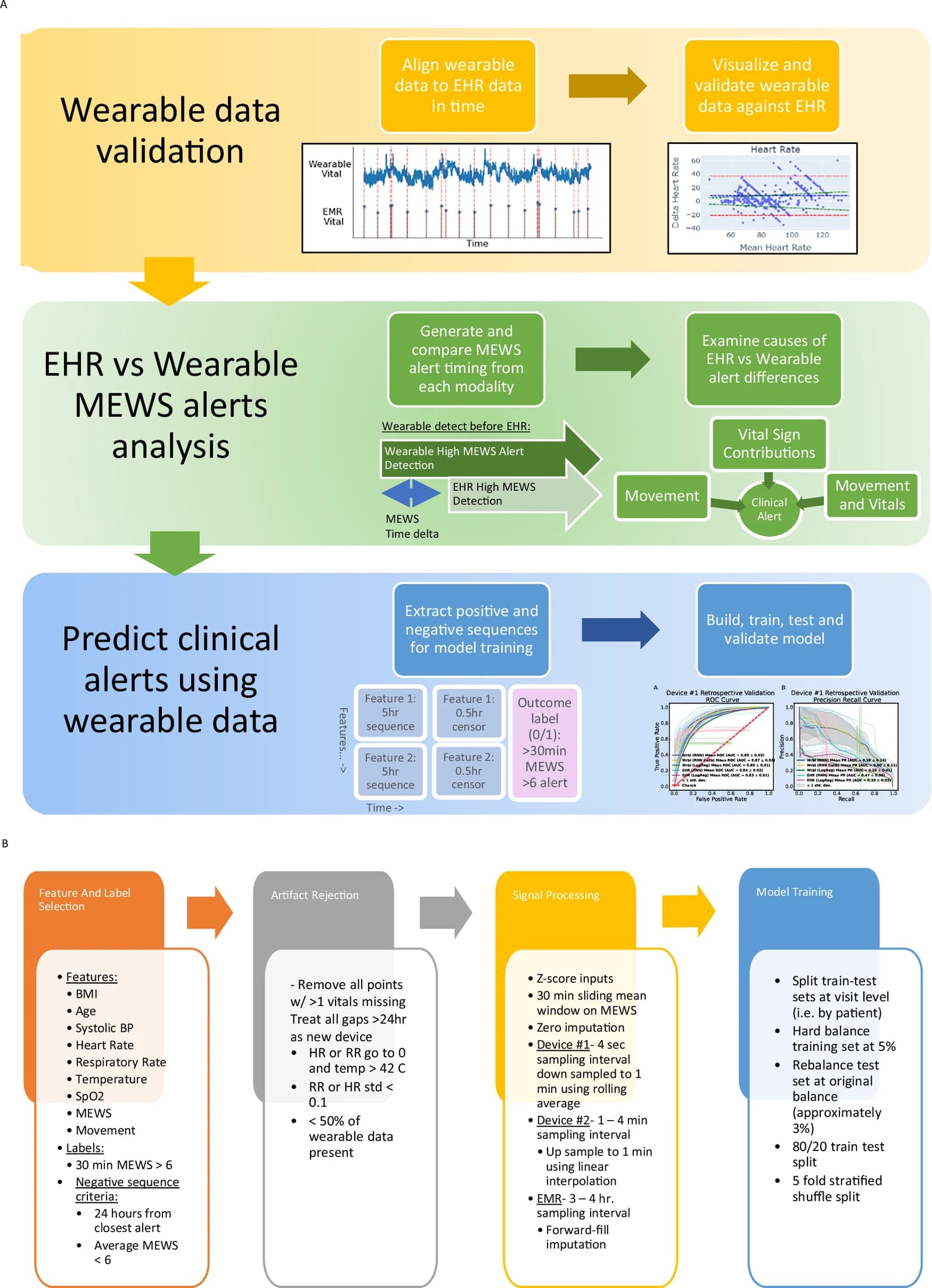
Validation stages for the wearable-based alert system, and the processing and modeling steps from device signals to alerts.
Validation stages for the wearable-based alert system, and the processing and modeling steps from device signals to alerts. Nature Communications, 2025 (opens in new tab) · CC BY-NC-ND 4.0
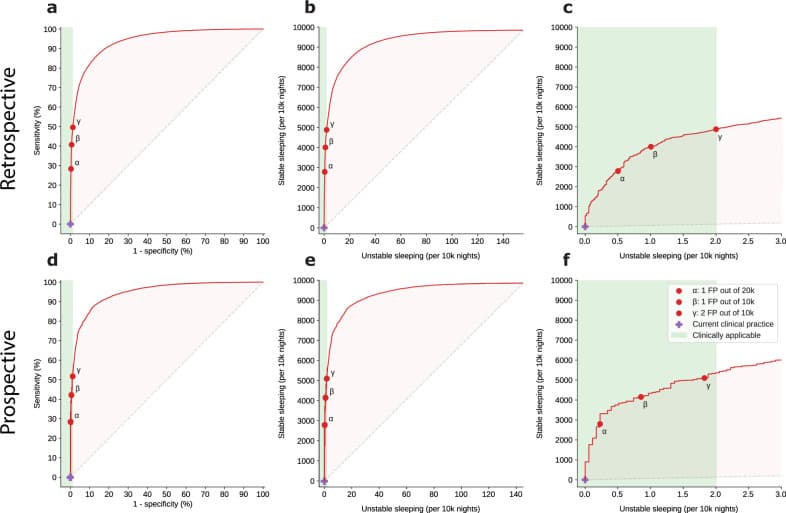
ROC curves on retrospective and prospective data at three clinical thresholds, trading off letting stable patients sleep against catching instability.
ROC curves on retrospective and prospective data at three clinical thresholds, trading off letting stable patients sleep against catching instability. npj Digital Medicine, 2020 (opens in new tab) · CC BY 4.0
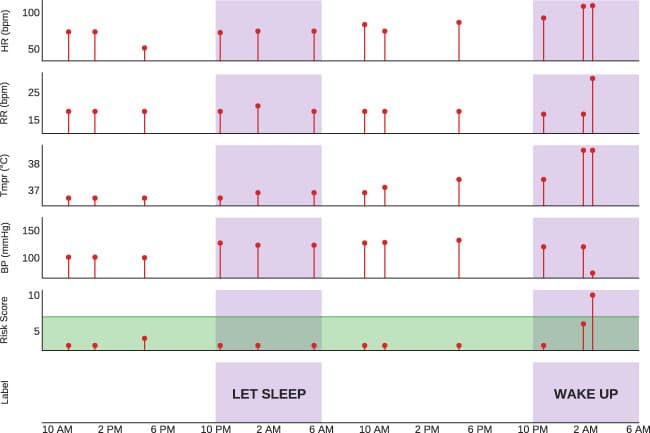
Example vital-sign input sequence and the model's overnight stability prediction with its risk score.
Example vital-sign input sequence and the model's overnight stability prediction with its risk score. npj Digital Medicine, 2020 (opens in new tab) · CC BY 4.0
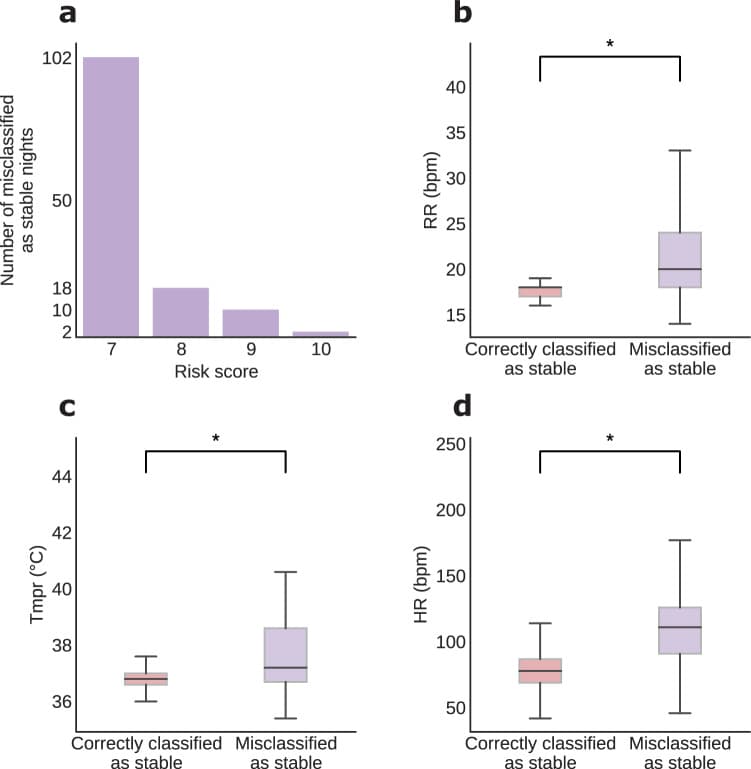
Vital-sign distributions for correctly classified stable patients versus those misclassified as stable.
Vital-sign distributions for correctly classified stable patients versus those misclassified as stable. npj Digital Medicine, 2020 (opens in new tab) · CC BY 4.0

From the papers

Published figures

Figures reproduced from the papers behind this project.

Each panel keeps its original source and license.

People

On this project

Theodoros Zanos, PhD

Professor & AVP

Diego Gonzalez Garcia-Torres

IT&S Project Coordinator

Derek Hansen, PhD

Senior Data Engineer

Michael Scheid, PhD

Assistant Investigator, Senior Biomedical Engineer

More NIH-funded programs

NIH-funded · U01OH012050

Transcutaneous auricular vagus nerve stimulation for PTSD in World Trade Center responders

A feasibility and acceptability study of daily, non-invasive auricular vagus nerve stimulation to reduce PTSD symptoms among 9/11 responders, twenty years after the attacks.

ONSET

NIH-funded · R01AG100193

Delirium identification and prediction

Machine learning that identifies delirium in hospitalized older adults from clinical notes, using large language models, and predicts who is at risk before it develops.

NIH-funded · SPARC

REVA: the human vagus nerve atlas

A comprehensive anatomical dataset of 60 human vagus nerves (30 left, 30 right), spanning millions of micro-CT images across hundreds of terabytes of data. Using 3D nnU-Net segmentation, this project builds a detailed vagus digital twin to guide the design of selective vagus nerve stimulation therapies, part of a $6.7 million NIH SPARC award in collaboration with the TNP Lab.

←Previous

Decoding the vagus nerve: preclinical recording and interpretation

Next→

Nursing workforce forecasting