Skip to content
Division of Health AIDivision of Health AI
AboutTeamResearchPublicationsJoin
Theme
Division of Health AIDivision of Health AI

Clinical AI built with the data and clinicians of Northwell Health.

Explore

  • About
  • Team
  • Research
  • Publications
  • Join

Affiliations

  • Feinstein Institutes (opens in new tab)
  • Northwell Health (opens in new tab)
  • Zucker School of MedicineHofstra Northwell

Located at

  • Institute of Health System Science
  • Institute of Bioelectronic Medicine
  • Manhasset, New York

© 2026 Division of Health AI, Northwell Health. All rights reserved.

All research

NIH-funded · Active since 2021

Transcutaneous auricular vagus nerve stimulation for PTSD in World Trade Center responders

A feasibility and acceptability study of daily, non-invasive auricular vagus nerve stimulation to reduce PTSD symptoms among 9/11 responders, twenty years after the attacks.
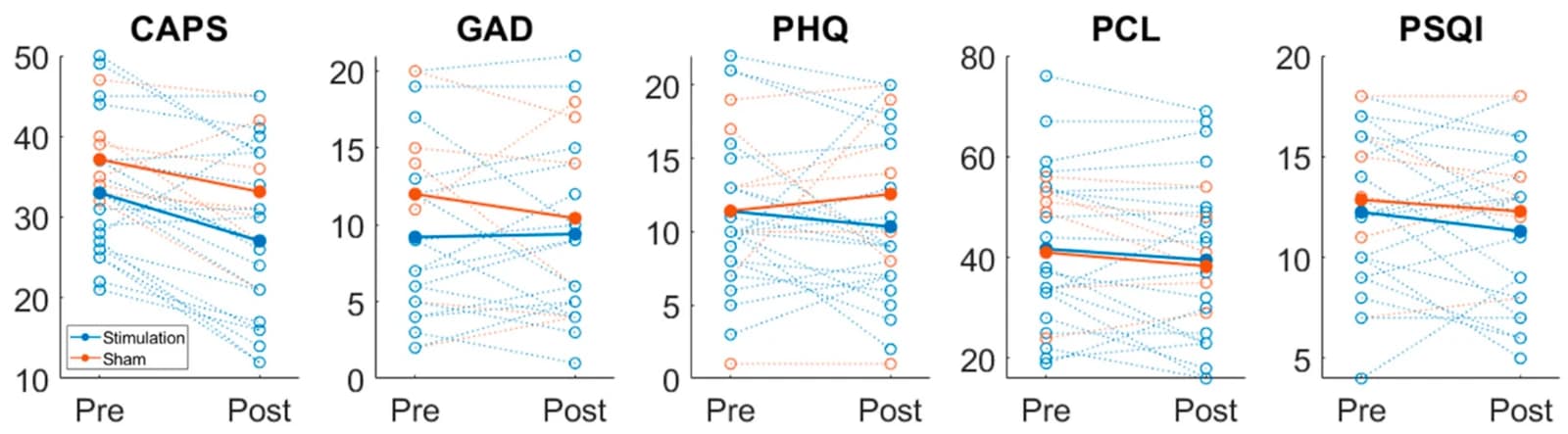
Changes in clinical scores from baseline to follow-up for all participants in the transcutaneous auricular vagus nerve stimulation study.
Changes in clinical scores from baseline to follow-up for all participants in the transcutaneous auricular vagus nerve stimulation study.International Journal of Environmental Research and Public Health, 2026 · CC BY 4.0 (opens in new tab)

Overview

Posttraumatic stress disorder remains the most prevalent mental health diagnosis among first responders to the World Trade Center attacks, and the trauma-focused therapies with the strongest evidence carry high dropout. Transcutaneous auricular vagus nerve stimulation (taVNS) is a non-invasive, self-administered alternative that engages the same autonomic pathways.

Funded by a NIOSH award (2021 to 2023) led by Rebecca Schwartz and Theodoros Zanos, the study began with focus groups on responders' mental health needs and their views of the device, published in 2022, and proceeded to a daily stimulation protocol whose adherence and clinical outcomes were published in 2026.

Status
Active since 2021
Program
NIH-funded
Funding
National Institute for Occupational Safety and Health
Publications
2, latest 2026
Team
2 members

Awards

  • Assessing the feasibility and acceptability of using non-invasive transcutaneous auricular vagus nerve stimulation to reduce PTSD symptoms in WTC responders

    National Institute for Occupational Safety and Health · $700K · 2021 to 2023

    Rebecca Schwartz and Theodoros Zanos

    U01OH012050 (opens in new tab)
Changes in clinical scores from baseline to follow-up for all participants in the transcutaneous auricular vagus nerve stimulation study.
Changes in clinical scores from baseline to follow-up for all participants in the transcutaneous auricular vagus nerve stimulation study. International Journal of Environmental Research and Public Health, 2026 (opens in new tab) · CC BY 4.0
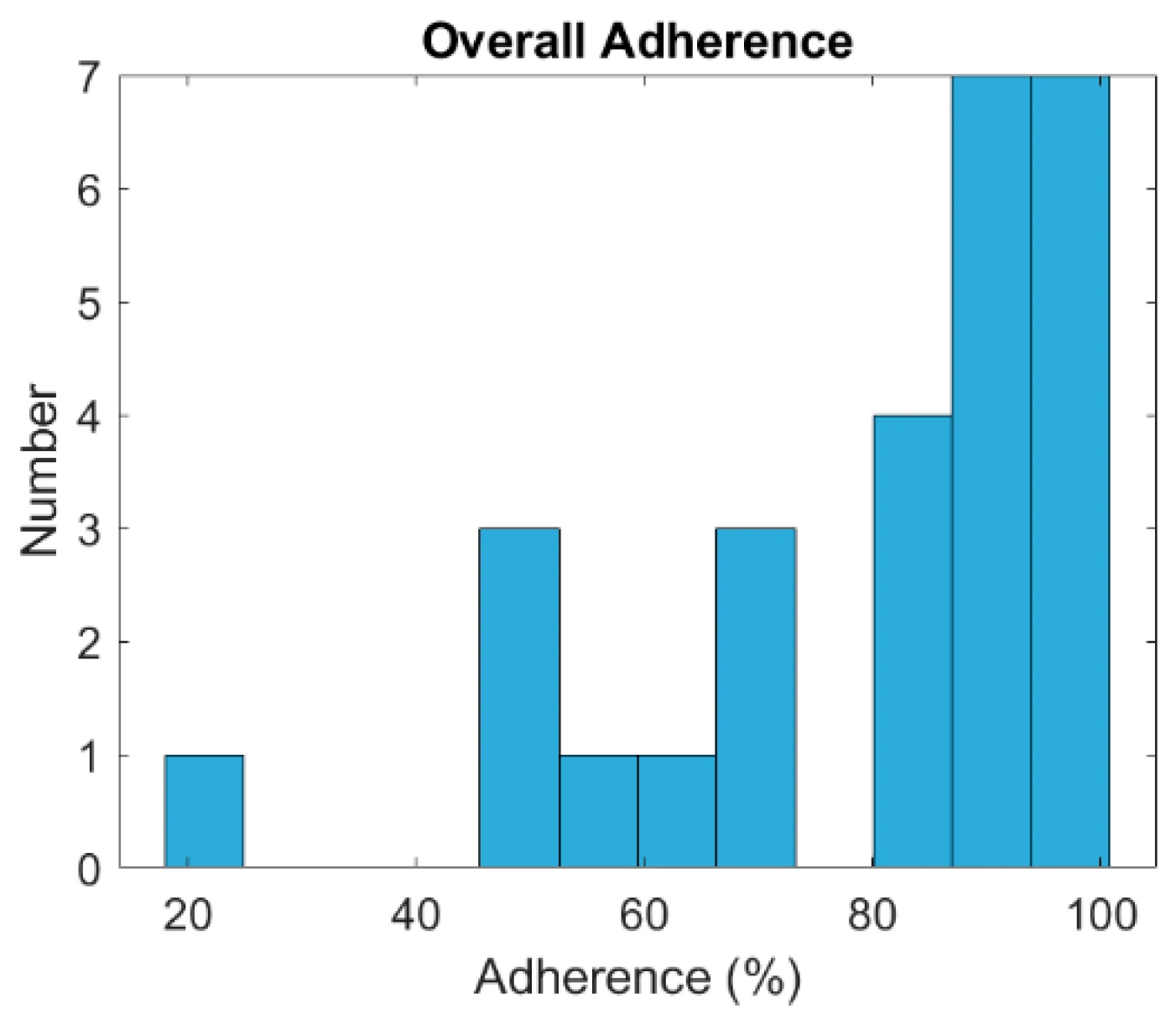
Adherence to the daily stimulation protocol across the study period.
Adherence to the daily stimulation protocol across the study period. International Journal of Environmental Research and Public Health, 2026 (opens in new tab) · CC BY 4.0

From the papers

Published figures

Figures reproduced from the papers behind this project.

Each panel keeps its original source and license.

Publications

Papers

View in the index

Recent

International Journal of Environmental Research and Public HealthMar 2026

Effects of Transcutaneous Auricular Vagus Nerve Stimulation on Posttraumatic Stress Disorder Symptoms in World Trade Center Responders: A Feasibility and Acceptability Study

(opens in new tab)

Earlier

International Journal of Environmental Research and Public HealthApr 2022

Understanding Mental Health Needs and Gathering Feedback on Transcutaneous Auricular Vagus Nerve Stimulation as a Potential PTSD Treatment among 9/11 Responders Living with PTSD Symptoms 20 Years Later: A Qualitative Approach

(opens in new tab)

People

On this project

Theodoros Zanos, PhD

Professor & AVP

Shubham Debnath, PhD

Senior Research Scientist

More NIH-funded programs

NIH-funded · R01NR020774

In-hospital deterioration prediction

Deep learning models that estimate a hospitalized patient's risk of deterioration continuously, from the electronic health record and from wearable sensors, so that clinicians are warned hours before a rapid response or ICU transfer.

ONSET

NIH-funded · R01AG100193

Delirium identification and prediction

Machine learning that identifies delirium in hospitalized older adults from clinical notes, using large language models, and predicts who is at risk before it develops.

NIH-funded · SPARC

REVA: the human vagus nerve atlas

A comprehensive anatomical dataset of 60 human vagus nerves (30 left, 30 right), spanning millions of micro-CT images across hundreds of terabytes of data. Using 3D nnU-Net segmentation, this project builds a detailed vagus digital twin to guide the design of selective vagus nerve stimulation therapies, part of a $6.7 million NIH SPARC award in collaboration with the TNP Lab.

←Previous

Sleep apnea screening in women

Next→

Uveal melanoma screening from fundus photographs