Division of Health AI

Clinical AI, built inside New York’s largest health system.
- 28hospitals
- the health system our models learn from
- 22M+datapoints
- training the division's patient-deterioration model
- 10modalities
- EHR, notes/reports, CM data, CT scans, IHC, x-rays, wound photos, EEGs, ECGs, VN recordings
- 13projects
- active across the lab right now
- 21people
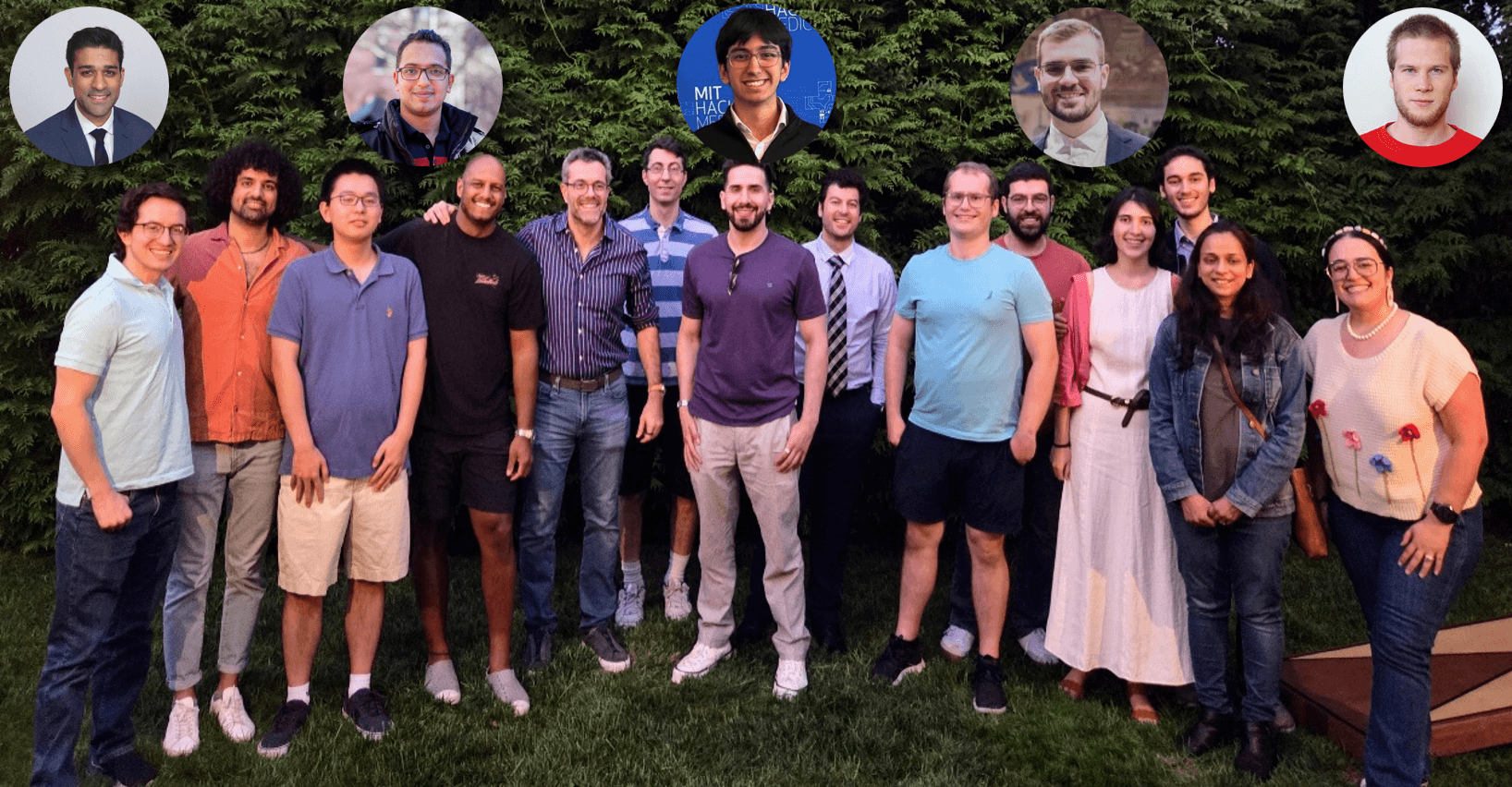
- researchers, engineers, and scholars in the lab
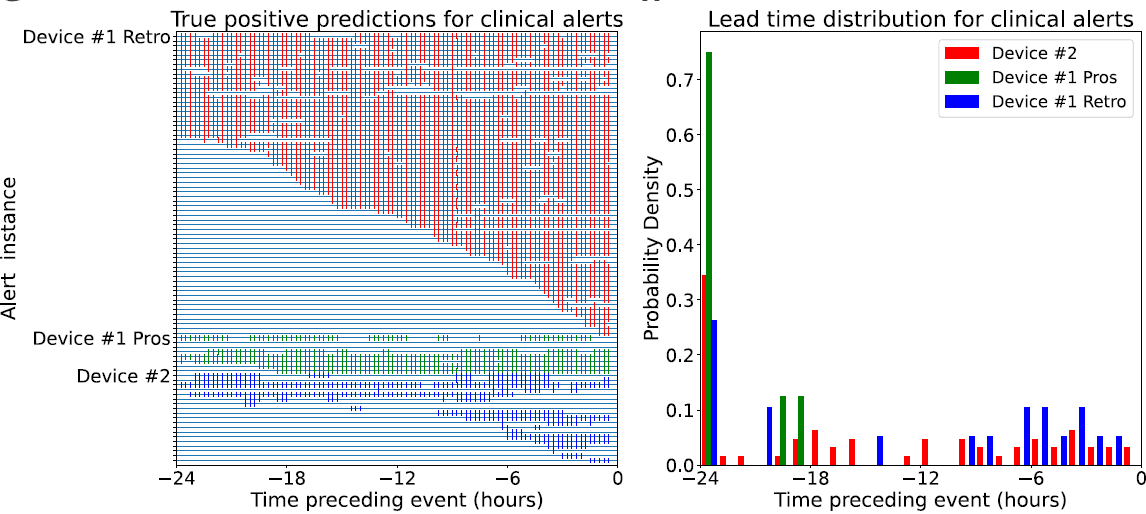
Warning of deterioration hours in advance
Nature Communications
Beyond episodic early warning systems: a continuous clinical alert system for early detection of in-hospital deterioration (opens in new tab)
Efficient patient monitoring on medical-surgical wards is crucial to prevent adverse events. Standard episodic inpatient assessment of vital signs can miss changes in health status and delay risk recognition. This study developed a wearable-based deep learning model using only 9 inputs to identify the onset of deterioration earlier than traditional early warning systems. The model could generalize to produce clinical alerts ahead of rapid response team (RRT) interventions, unplanned intensive care unit (ICU) transfers, intubations, cardiac arrests, and in-hospital deaths. Using multiple stages of validation on 888 adult non-ICU inpatient visits, the RNN model predicted both periods of…
- mean advance warning
- 17hrs
- elevated MEWS scores
- 0.89AUC
What the lab is building
In-hospital deterioration: wearable monitoring
A wearable-based deep learning model using just 9 physiological inputs predicts clinical deterioration up to 17 hours before onset, enabling earlier intervention. Funded by a 4-year, $3.1M NIH grant, the model generalizes across a range of adverse outcomes, including rapid response calls, unplanned ICU transfers, intubations, and in-hospital deaths, and demonstrated 81.8% accuracy across 888 inpatient visits.
Point-of-care AI
In-hospital deterioration prediction (EHR)
The Northwell In-hospital Deterioration Model (NIDM) is an EHR-based deep learning model that continuously estimates a patient's risk of a deterioration event, unplanned ICU transfer, intubation, or death, within the next 48 hours from routinely collected electronic health record data. Deployed in silent mode inside Northwell's Epic environment for prospective monitoring, NIDM is built to surface the patient-specific factors behind each prediction, so care teams see not only who is at rising risk but why, early enough to act.
Point-of-care AI
Vagus nerve digital twin (REVA)
A comprehensive anatomical dataset of 60 human vagus nerves (30 left, 30 right), spanning millions of micro-CT images across hundreds of terabytes of data. Using 3D nnU-Net segmentation, this project builds a detailed vagus digital twin to guide the design of selective vagus nerve stimulation therapies, part of a $6.7 million NIH SPARC award in collaboration with the TNP Lab.
Anatomical Data AI
Nursing workforce optimization
Machine learning models using DeepAR probabilistic forecasting predict nursing workforce demand across Northwell's hospital units up to 12 months ahead, supporting preemptive hiring and staffing decisions across diverse specialties.
Operational AI
Maternal fever / neonatal sepsis prediction
Continuously monitored vital signs and heart rate variability during labor predict maternal fever 2-3 hours before clinical onset, with area under the curve of 0.748, enabling early detection of mothers at risk for neonatal early-onset sepsis.
Point-of-care AI
Delirium classification
Developing a machine learning framework to automatically identify delirium from clinical chart text using large language models, and building a predictive model to detect delirium onset early using clinical and physiological biomarkers.
Point-of-care AI
The Division
Selected papers
International Journal of Environmental Research and Public Health
Effects of Transcutaneous Auricular Vagus Nerve Stimulation on Posttraumatic Stress Disorder Symptoms in World Trade Center Responders: A Feasibility and Acceptability Study
(opens in new tab)International Journal of Neural Systems
Longitudinal characterization of compound action potentials in chronic vagus nerve recordings in mice
(opens in new tab)Spend a semester building clinical AI.
About the internshipA part-time, fully remote research internship for the spring 2027 semester. Applications open fall 2026.