Skip to content
Division of Health AIDivision of Health AI
AboutTeamResearchPublicationsJoin
Theme
Division of Health AIDivision of Health AI

Clinical AI built with the data and clinicians of Northwell Health.

Explore

  • About
  • Team
  • Research
  • Publications
  • Join

Affiliations

  • Feinstein Institutes (opens in new tab)
  • Northwell Health (opens in new tab)
  • Zucker School of MedicineHofstra Northwell

Located at

  • Institute of Health System Science
  • Institute of Bioelectronic Medicine
  • Manhasset, New York

© 2026 Division of Health AI, Northwell Health. All rights reserved.

All research

Division project · Active since 2020

Computational models of vagus nerve stimulation

Histologically realistic models of the cervical vagus nerve that predict which fibers a stimulation pattern will activate, used to design selective, organ-specific vagus nerve stimulation.
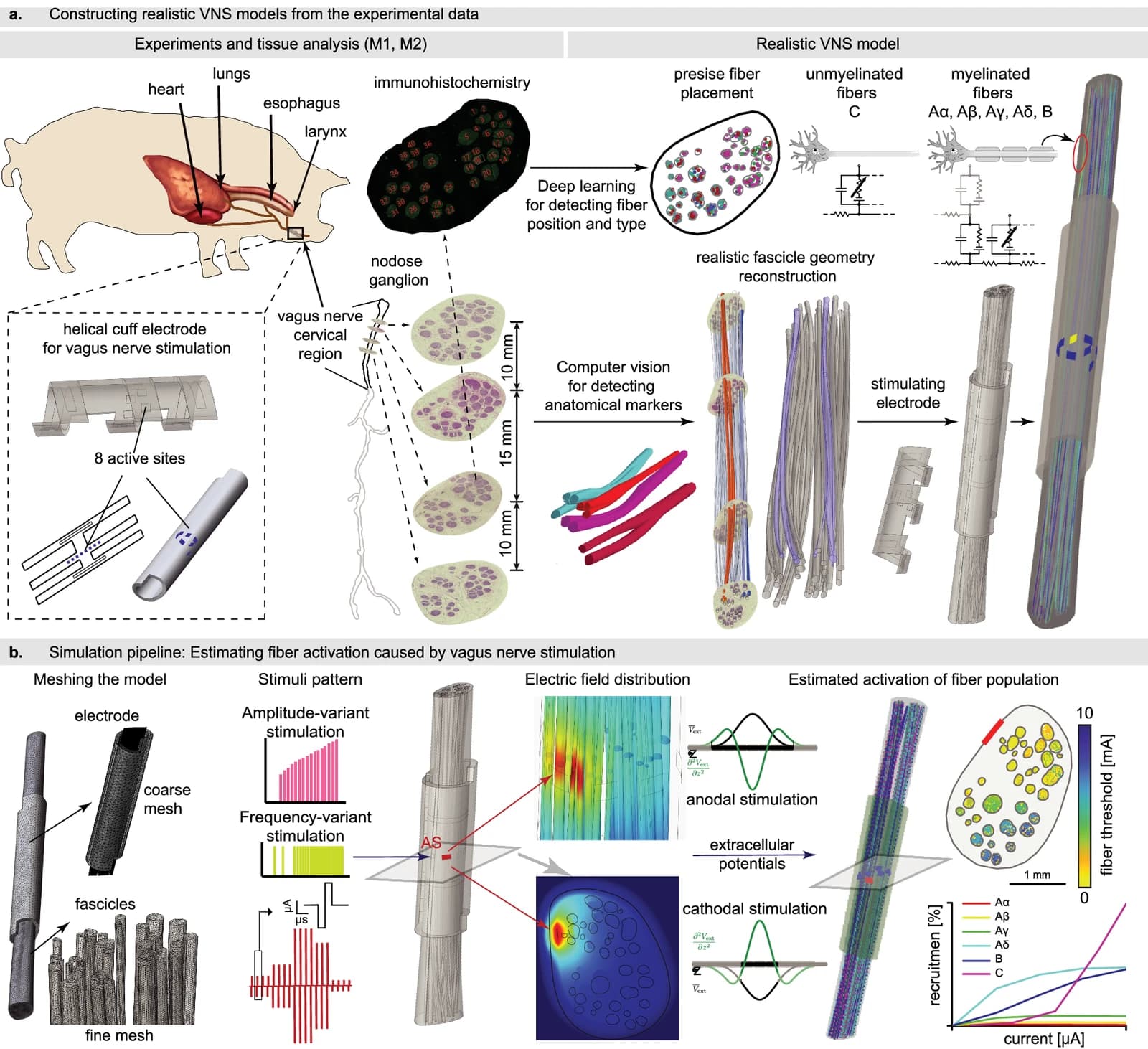
Pipeline for building and exploiting a histologically and morphologically realistic model of cervical vagus nerve stimulation (VaStim).
Pipeline for building and exploiting a histologically and morphologically realistic model of cervical vagus nerve stimulation (VaStim).Nature Communications, 2024 · CC BY 4.0 (opens in new tab)

Overview

Vagus nerve stimulation is approved for epilepsy and depression and under study for heart failure, inflammation, and more, but a cuff on the cervical vagus activates fibers to every organ at once. The project builds models of the nerve from its real fascicular anatomy (VaStim), estimates each fiber's activation threshold efficiently, and personalizes the model to an individual animal so that stimulation parameters can be optimized in silico before they are tried in vivo.

In swine, intermittent interferential current stimulation designed with these models activates organ-specific fibers in a controlled spatiotemporal pattern and reaches a desired bronchopulmonary effect with fewer laryngeal side effects than conventional sinusoidal stimulation.

Status
Active since 2020
Program
Division project
Publications
3, latest 2025
Team
3 members
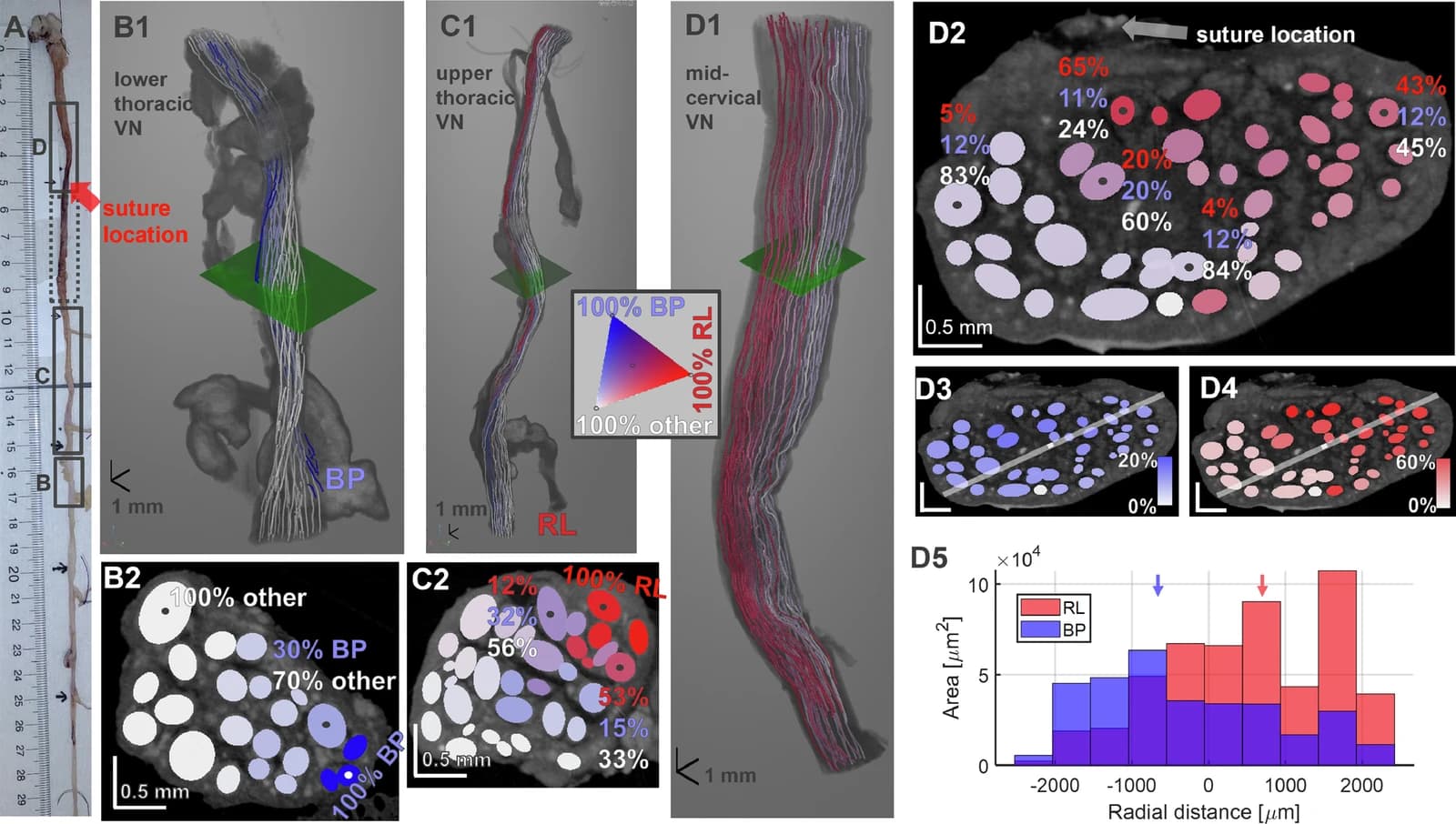
Bronchopulmonary- and recurrent laryngeal-specific fascicles progressively merge, giving rise to a bimodal anatomical organization at the cervical level.
Bronchopulmonary- and recurrent laryngeal-specific fascicles progressively merge, giving rise to a bimodal anatomical organization at the cervical level. Nature Communications, 2025 (opens in new tab) · CC BY-NC-ND 4.0
Pipeline for building and exploiting a histologically and morphologically realistic model of cervical vagus nerve stimulation (VaStim).
Pipeline for building and exploiting a histologically and morphologically realistic model of cervical vagus nerve stimulation (VaStim). Nature Communications, 2024 (opens in new tab) · CC BY 4.0
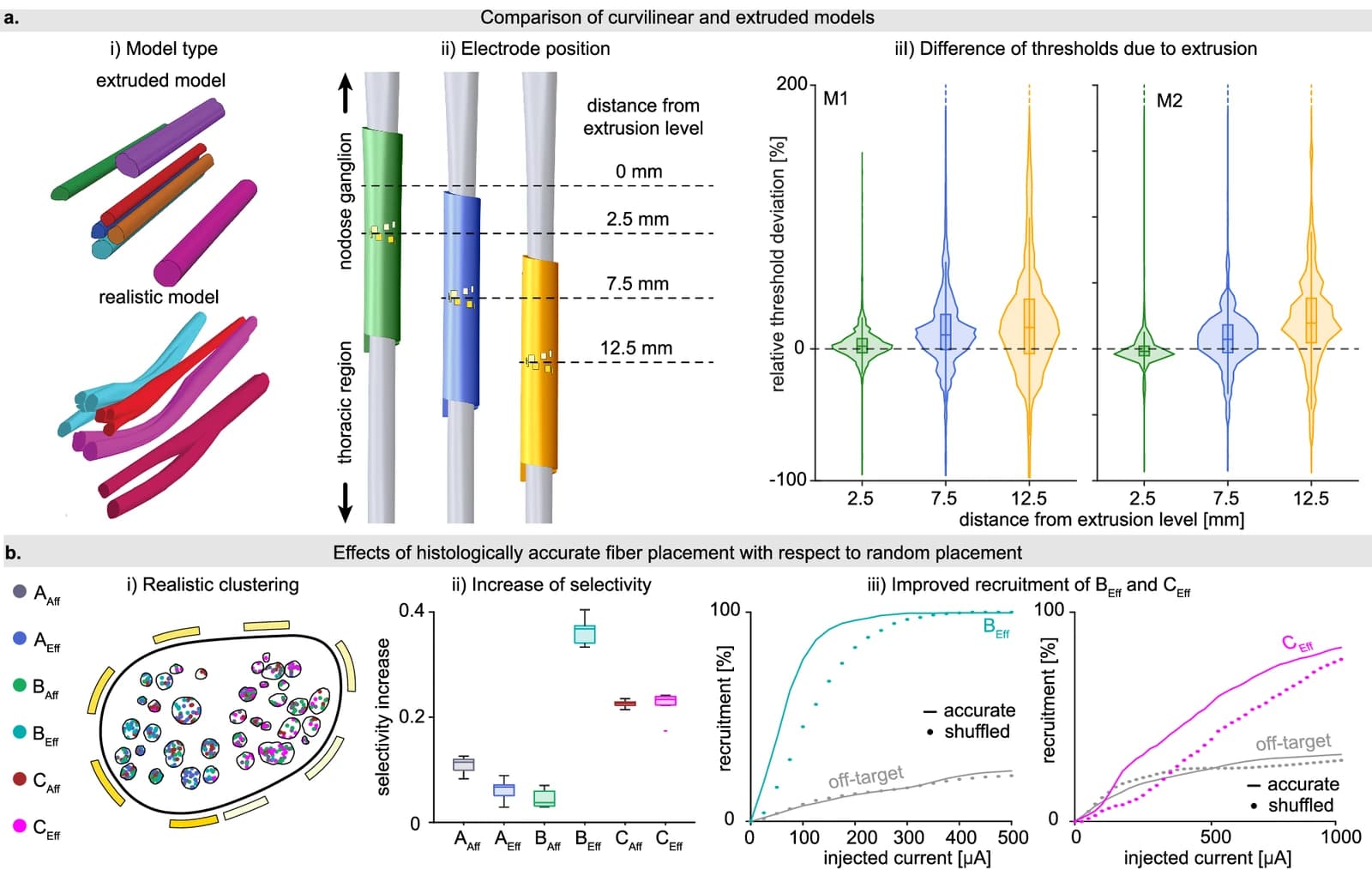
Histologically and morphologically realistic nerve models compared with simplified ones.
Histologically and morphologically realistic nerve models compared with simplified ones. Nature Communications, 2024 (opens in new tab) · CC BY 4.0
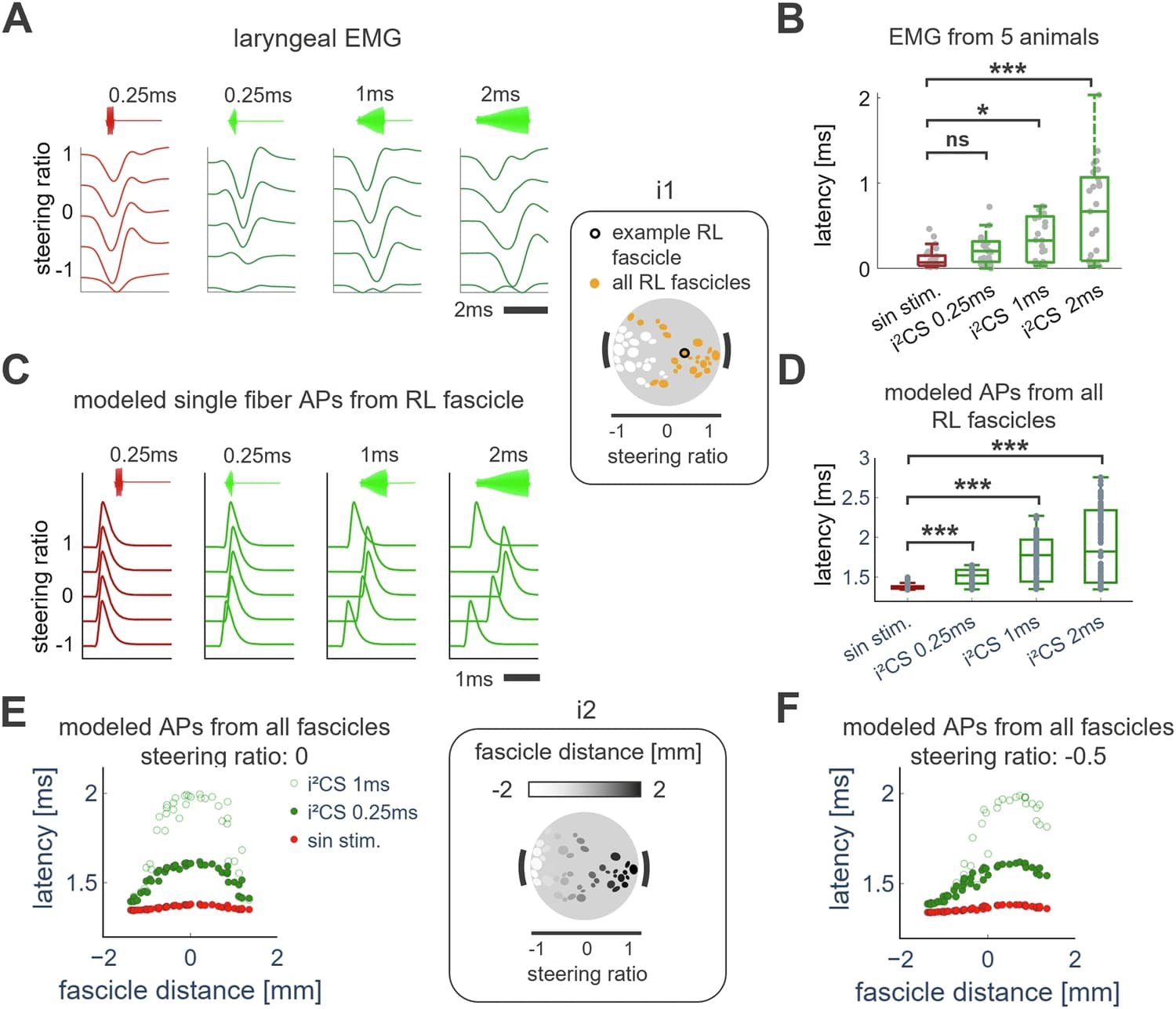
Interferential stimulation activates vagal fibers in a specific spatiotemporal pattern, in swine experiments and in swine vagus nerve models.
Interferential stimulation activates vagal fibers in a specific spatiotemporal pattern, in swine experiments and in swine vagus nerve models. Nature Communications, 2025 (opens in new tab) · CC BY-NC-ND 4.0

From the papers

Published figures

Figures reproduced from the papers behind this project.

Each panel keeps its original source and license.

Publications

Papers

View in the index

Recent

Nature CommunicationsMay 2025

Control of spatiotemporal activation of organ-specific fibers in the swine vagus nerve by intermittent interferential current stimulation

(opens in new tab)
Nature CommunicationsJul 2024

Towards enhanced functionality of vagus neuroprostheses through in silico optimized stimulation

(opens in new tab)

Earlier

Scientific ReportsJun 2020

Anodal block permits directional vagus nerve stimulation

(opens in new tab)

People

On this project

Theodoros Zanos, PhD

Professor & AVP

SK

Sarah Khan

Visiting Scholar

Todd Levy, MS

Senior Biomedical Engineer

More division projects

Division project

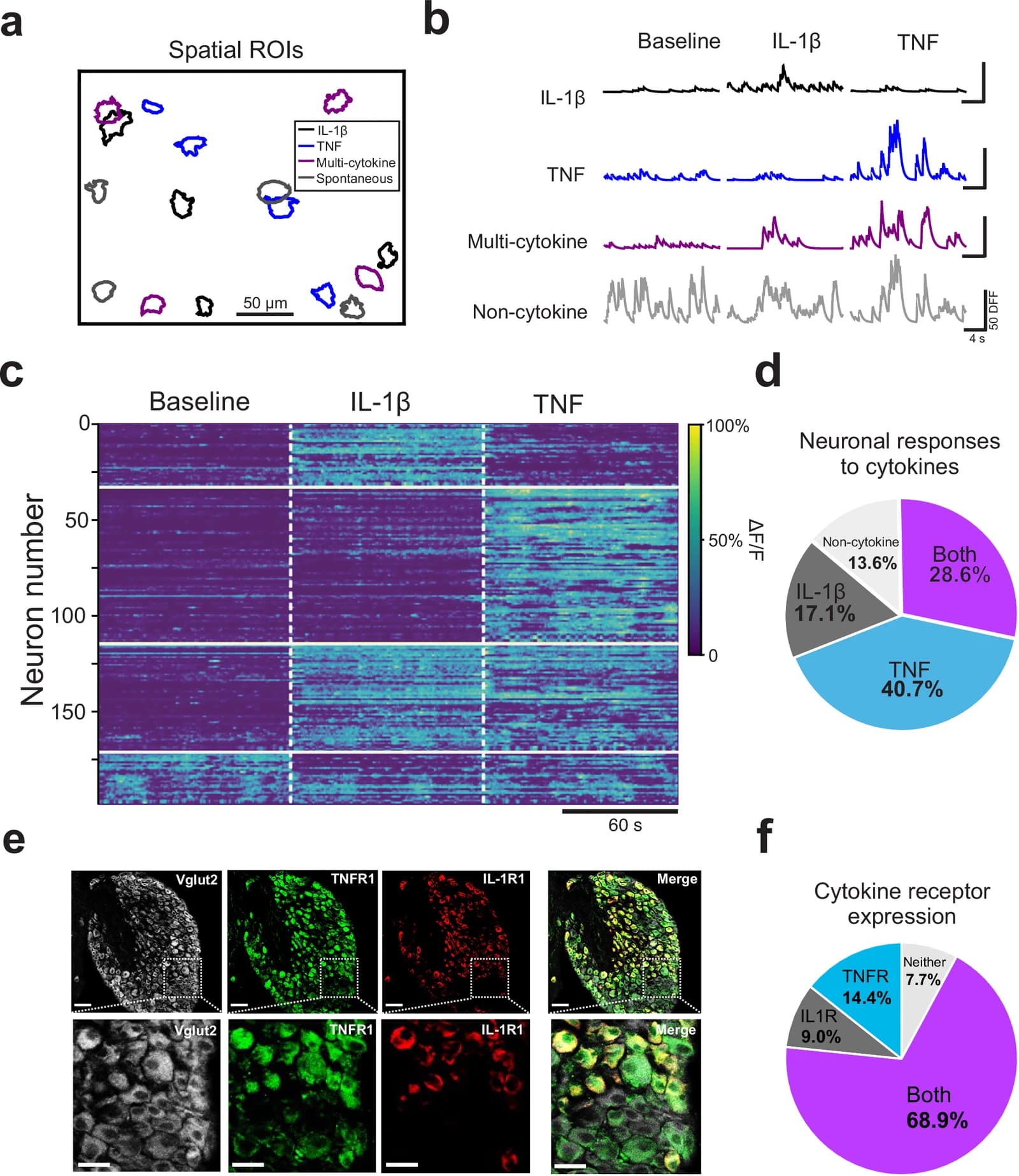
Decoding the vagus nerve: preclinical recording and interpretation

Recording from the mouse vagus nerve, chronically and wirelessly, and decoding what its neurons report about inflammation and metabolism, toward bioelectronic devices that diagnose and treat from neural signals.

Division project

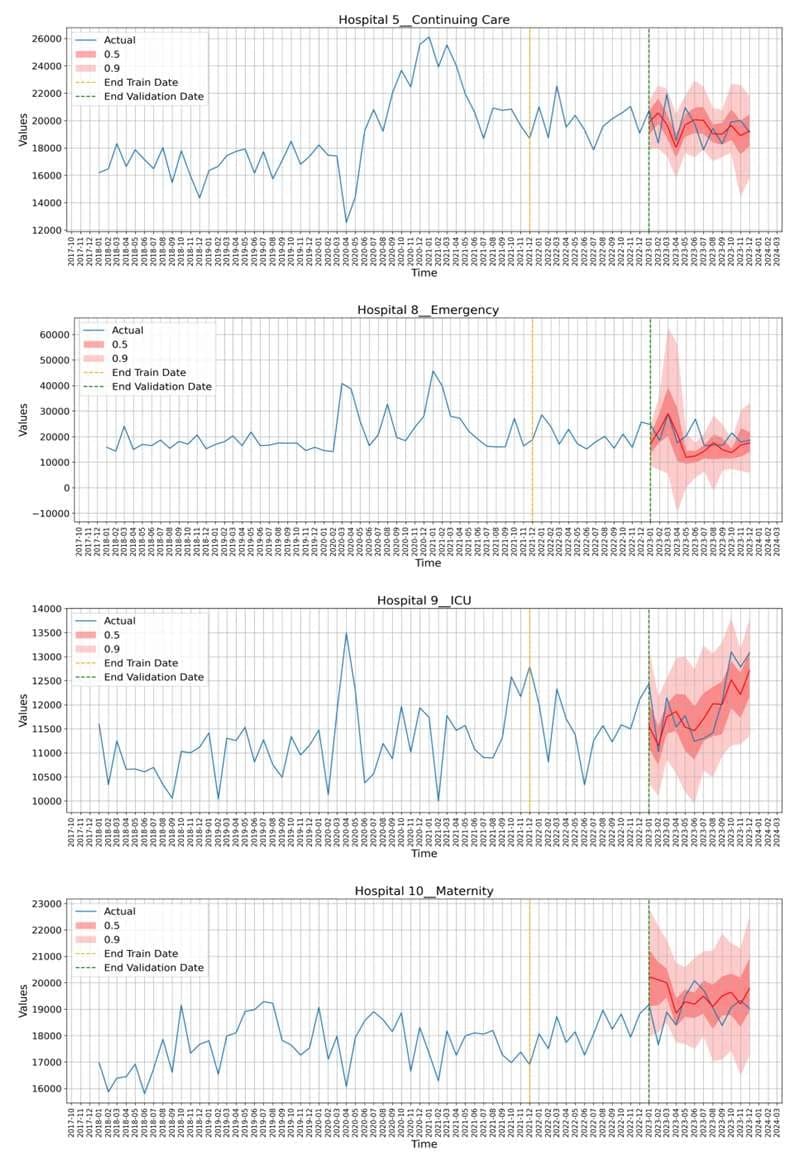
Nursing workforce forecasting

Machine learning models using DeepAR probabilistic forecasting predict nursing workforce demand across Northwell's hospital units up to 12 months ahead, supporting preemptive hiring and staffing decisions across diverse specialties.

Division project

ECG deep learning

Generative and predictive models over the electrocardiogram: reconstructing the full twelve-lead ECG from a minimal set of leads, and stratifying acute coronary syndrome risk from the admission ECG.

Division project

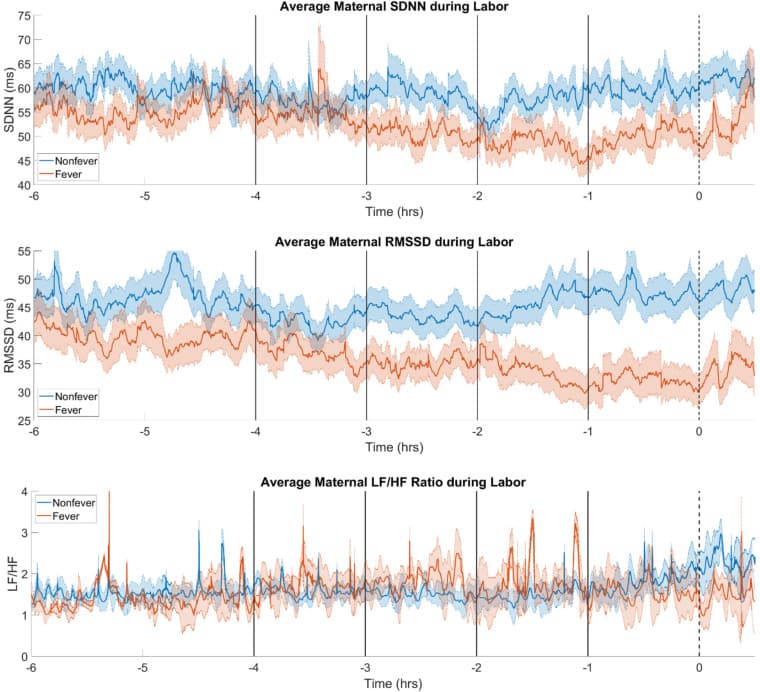
Maternal fever / neonatal sepsis prediction

Continuously monitored vital signs and heart rate variability during labor predict maternal fever 2-3 hours before clinical onset, with area under the curve of 0.748, enabling early detection of mothers at risk for neonatal early-onset sepsis.

←Previous

Cardiac electrophysiology: arrhythmia prediction, VNS for ectopy, and closed-loop CPR

Next→

Decoding the vagus nerve: preclinical recording and interpretation