Preclinical AI · Active
All researchChronic vagus nerve recordings (mouse)
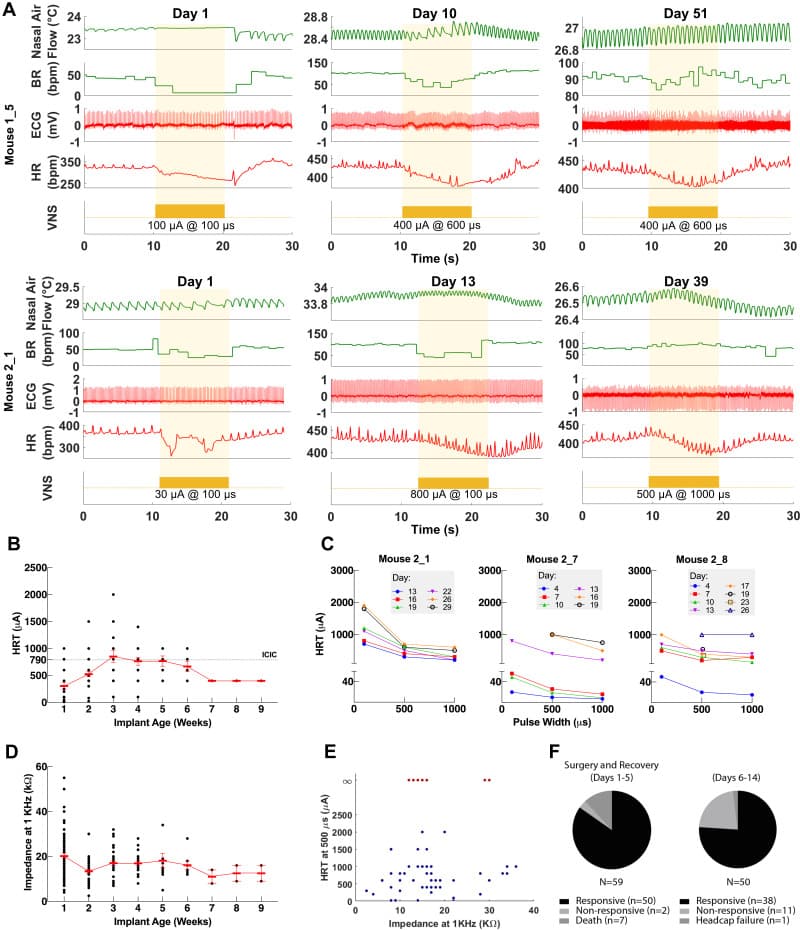
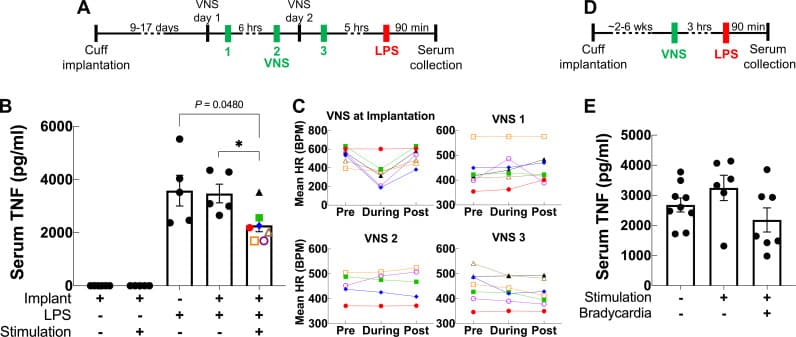
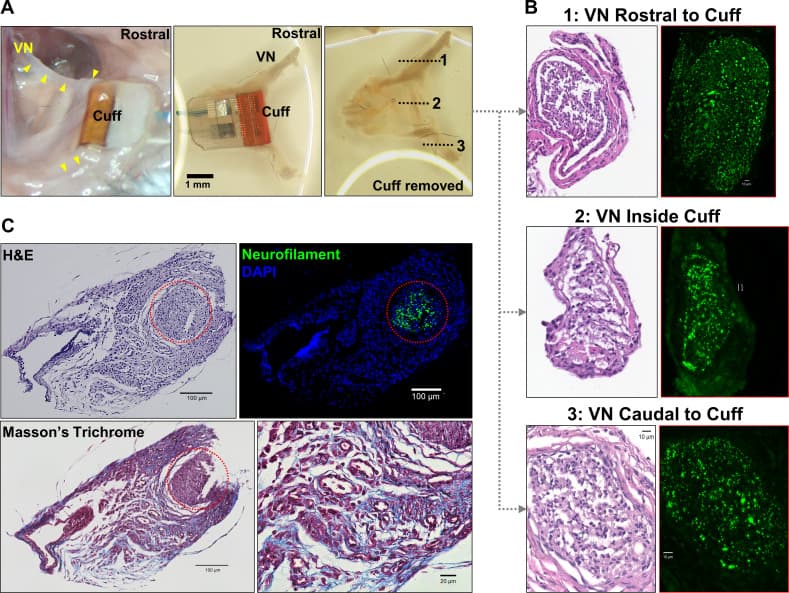
Chronic wireless recording of compound action potentials from the mouse vagus nerve up to 6 months, enabling longitudinal tracking of neural activity in disease models (CIA, CAIA) to predict inflammation severity and evaluate neuromodulation efficacy.
3 researchers6 publications3 figures
Preclinical AIDivision of Health AI
From the papers
Published figures
Figures reproduced from the open-access papers behind this project.
Each panel keeps its original source and license. Scroll the column at left to move through the published results while these notes stay in view.
People · 3
On this project



Publications · 6
Related papers
International Journal of Neural Systems
Longitudinal characterization of compound action potentials in chronic vagus nerve recordings in mice
(opens in new tab)Biosensors and Bioelectronics
A fully implantable wireless bidirectional neuromodulation system for mice
(opens in new tab)Brain Stimulation
Quantitative estimation of nerve fiber engagement by vagus nerve stimulation using physiological markers
(opens in new tab)Journal of Neuroscience Methods
An impedance matching algorithm for common-mode interference removal in vagus nerve recordings
(opens in new tab)International Conference on Solid-State Sensors, Actuators and Microsystems (TRANSDUCERS)
A new 3D self-adaptive nerve electrode for high density peripheral nerve stimulation and recording
(opens in new tab)Related
More in Preclinical AI
Vagus decoding: inflammation (preclinical)
This research decodes how vagus nerve neurons sense inflammatory cytokines in real time, enabling development of diagnostic bioelectronic devices and closed-loop inflammation treatments. Building on prior work showing vagal decoding of immune signals, recent studies reveal that individual vagal sensory neurons selectively respond to specific cytokines, with altered responses during active inflammation.
Preclinical AI
Vagus decoding: metabolic states (preclinical)
Preclinical research using decoding algorithms to identify neural signals from the vagus nerve that respond specifically to hypoglycemia. A decoder achieved high accuracy in reconstructing blood glucose levels from vagus nerve recordings, with median error of 18.6 mg/dL, and revealed that TRPV1 nociceptor neurons are critical for sensing low glucose states.
Preclinical AI